



The advent of the pandemic has shaken the world in every way, triggering a process of rethinking not only our habits but, above all, our approach to work, forcing us toward a smart working model for which we were truly unprepared.
We've all sensed that something has jammed in the mechanism of work organization , and, as often happens in moments of paradigm shift, there's an opportunity to profoundly rethink our understanding of work.
Although many interesting reflections have remained trapped in a debate that has at times taken on the tone of football fans, we must continue to seek a new balance, different from company to company, composed of diverse and heterogeneous factors, because this is the challenge of complexity.
management and organization experts have long been highlighting the inadequacy of many organizational and management practices. To name just one of the best-known, Gary Hamel, in his book "Humanocracy," highlights how the individuals within an organization are often much more resilient, creative, and motivated than the organization itself. He identifies the cause of this rigidity and limited ability to harness people's talents in the bureaucratic mentality with which most organizations are run.
What's wrong with work?
Where then should we start for this paradigm shift?
To solve a complex issue with a joke, it is a question of rethinking the “Charlie Chaplin” model (in the famous assembly line scene in Modern Times), that is, the idea that it is “more efficient” or “value-added” to break down activities and work processes into minimal tasks, each entrusted to a person who does only that, while great attention is placed on planning, controls and controllers who must ensure that the planning and rules are scrupulously observed.
The problem? Continuing to replicate an approach born in the factories of the late nineteenth century that might have made sense in that historical context but which in today's world of work made up of integrated processes, high professionalism and intellectual activities , simply fails to function and generate value.
Paradoxically, introducing high levels of specialization and fragmentation into a process that should be integrated doesn't generate efficiency but achieves the opposite. After atomizing individual responsibility within the process, it forces us to spend a lot of time reassembling the value chain and coordinating the various people and activities. This time is then diverted from activities that truly add value for customers.
A very personal benchmark, based on projects and client observations over the past few years, suggests (without claiming general validity or scientific rigor) that the time dedicated to formal and informal coordination accounts for at least 20-30% of the hours we spend at work . We're not talking about development meetings and creative exchanges of ideas, or aspects of social interaction and relationships; we're only counting the time dedicated to operational coordination between people and activities, managing conflicting priorities between departments, dealing with unforeseen events not covered by existing rules and procedures, and so on.
The pandemic and remote working (which isn't smart working, as we've already said) have simply exposed this inefficiency. Moments that were once informal and immediate: the question asked to the person sitting next to us, the conversation between the boss and another colleague overheard in the open space, the quick question about the project asked in the hallway or over coffee—these were things we didn't even notice, but they served to help each of us recreate the context of our work, which the fragmented organization of processes had lost. Physical distance has erased this context and replaced it with more calls, chats, and messages to "align," "coordinate," and "take stock." Suddenly, that hidden time has become apparent to us in all its relevance.
Two questions to explore:
Where then should we start to address this problem?
We need to rediscover the role of sometimes uncomfortable questions, which expose real problems and, if approached without fear, provide valuable insights.
Mainly two:
- Why?
- What are we taking for granted?
Asking why (often, like children) helps us trace the chain of causes when analyzing a problem. It helps us go beyond first impressions and the hasty or incomplete explanations we give for what we observe. It allows us to understand if there might be an alternative reading of the facts, a different way of connecting cause and effect, a different explanation for people's behavior.
Asking what we're taking for granted helps uncover blind spots in building solutions . A new product or project plan, like the answer to an operational problem we've encountered, are always speculations based on hypotheses, very often veritable leaps of faith of which we're not fully aware. Creating solutions to these questions without thoroughly verifying, possibly with facts, in the field, exposes us to risks of which we're not always aware and therefore to unpleasant surprises.
Tailored Solutions
The consulting and management theory space is crowded with tools or methods touted as quick, foolproof, and above all, cost-effective.
The appeal of these proposals is very strong: faced with the complexity of problems , the idea of applying a set of rules, a predefined three-, five-, or ten-step approach, a methodology, or a set of ready-to-use tools seems to simplify the task of implementing change. If things don't go according to plan, it will simply be the fault of the method, the tool, the consultant, or the people resisting change.
As desirable as this perspective may seem, it has a limitation: it doesn't help solve problems but shifts them from one place to another. Tailored work is needed to fully exploit the economic value of the benefits that can be derived from it.
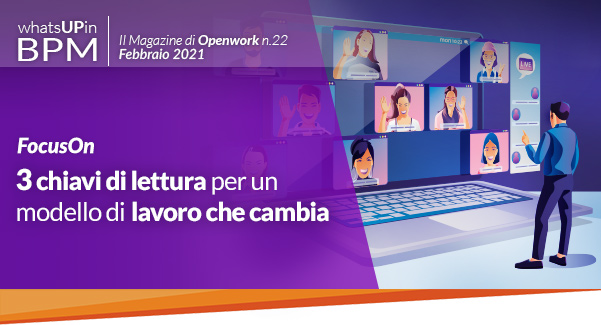
Three keys to rethinking work.
Although there is no predefined path, there are three essential elements for those who want to rewrite the way they work in the company, whether in person, remotely, or in a smart working , where people alternate between individual and team work, in different locations and at different times:
- People
- Organization
- Processes
People , where the key word is: trust. Gary Hamel reminds us that the essential characteristic of a bureaucratic enterprise is to maximize control over individuals in pursuit of organizational efficiency, while today's increasingly volatile and accelerated environment demands agility, which, however, is difficult to achieve without unleashing the collective intelligence of the people who work in organizations every day. The first step in this journey is to restore trust and therefore operational and decision-making autonomy at all levels of the company , obviously by defining and sharing with everyone, much more broadly and clearly than today, the common goals and the concrete contribution that each person's work makes to achieving these goals.
Organization . The key word here is: multifunctionality. One possible way to combat fragmentation and thus reduce all the coordination activities and the bottlenecks they generate in remote working is to rethink the structure of operational teams by creating multifunctional structures, composed of people no longer divided into functions and departments based on their skills, but united by having responsibility for a channel, a product, a process, a customer, or a group of customers. This facilitates both in-person and remote working because all the skills and authority needed to independently manage one's objective are present within a smaller team, thus limiting the number of stakeholders required to make decisions and manage operations .
Processes , whose key words are: homogeneity and automation. A process becomes homogeneous when the rules for its management are known to everyone who works within it and exceptions or special cases are gradually integrated into the process in a logic of continuous improvement. The process's performance metrics are also clear and available to everyone, helping each person understand how their work is contributing to the overall outcome of the process and ultimately to the creation of value for the customer. Automation, on the other hand, means relieving people of the task of managing the transitions between one phase of the process and the next, replacing them with an automatic system of rules and junctions where technology "directs the traffic" of individual practices according to clear yet flexible rules, so as to present the tasks to be performed to each person in an orderly manner, focusing their attention on value-creating activities, customer contact, and the evaluation of the merits of requests or tasks to be managed.
When managing the flow of work no longer falls to individuals, the downtime spent trying to manage unexpected events or waiting for decisions and responses from other people or departments is reduced. This frees up time for truly valuable exchanges, both remotely and in person: sharing experiences, setting goals, and imagining the evolution and improvement of the work and the team.
In a word, everyone's work is starting to get truly “ smarter ”.

Openwork and Treccani will be hosting an event dedicated to Digital Health. The event will take place on March 19th at 6:00 PM.

Openwork is pleased to announce its participation in the event promoted by Treccani – Puglia and Basilicata Agency – entitled , the new frontier of medicine: meanings and applications” .
Thanks to its commitment over the years in the field of digital healthcare , as well as the prestigious awards obtained through the Jamio , Openwork was chosen by Treccani to offer its contribution to a meeting dedicated to Digital Health .
Scientific and technological progress, in fact, outlines its own scenarios through these two new words, the meanings of which are explained in the Treccani encyclopedia.
Therefore, the event, in addition to emphasizing the meaning of Digital Health , aims to understand its application in the field and the expected benefits. In particular, several concrete use cases will be analyzed to understand its approaches, potential, and prospects within our society.
Three industry professionals will meet at the event:
Prof. Eugenio Santoro,
Head of the Medical Informatics Laboratory,
Mario Negri Institute for Pharmacological Research IRCCS,
Editor of the definition of Digital Health in Appendix X of the Treccani Italian Encyclopedia
Dr. Piero Cosoli,
Health Business Line Manager, Openwork srl
Dr. Maurizio Leone,
Director of the Neurology Unit at the IRCCS Casa Sollievo della Sofferenza
The event will be held online on Friday, March 19th at 6:00 PM (limited availability).
Below is the registration link: https://forms.gle/gQbhXAhX8UD1pW8c8
jBIZ and jTECH, the magazine's latest news!
Openwork magazine is enriched with new content.
Through solutions and concrete use cases, we'll discover how to streamline process complexity with the features offered by Jamio, Business Process Management platform .
jBIZ | Business Digitalization According to Jamio:
Managing Authorization Processes
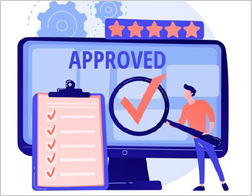
In the complex landscape of business processes , authorization processes are among the most numerous, transversal, and complex.
Every organization manages thousands of documents per year, complex approval procedures review , and rebounds, often in an unstructured and disorganized manner.
These processes can also involve the entire organizational structure, increasing the complexity of management and issues. Typically defined as long-running, authorization processes , once initiated, can remain dormant for a long time, until someone, identified based on written and unwritten rules, takes action to "make a decision." Although these processes are very different, they share common elements and can be managed with human task management applications supported by Business Process Management Platforms .
Continue reading…
jTECH | Application development using Jamio
Generating and converting a file to PDF from a Jamio resource

's learn how to generate a PDF report using a Jamioware sample called NotaSpese.
Jamioware allows a requester (named Collaborator in Jamioware) to complete an expense report and automatically generate a report that is attached to the request itself. The report contains a graph showing expense trends, a photo of the requester, and a table detailing the expenses.
For this purpose, the following are defined in Jamioware:
– an Expense Report Request data type;
– a Collaborator Identity type;
– a process called ExpenseReportExpenseExpenseExpense, for managing the approval cycle;
– a process called ApplyReportTimber, for generating the report in Word format and subsequent PDF conversion with application of the stamp;
– a process called GenerateReport, for generating the report in Word format only;
TAKE A MINUTE TO EXPLAIN HOW JAMIO CAN CHANGE YOUR WORK
In an ever-evolving market, technology needs to adapt to your needs.
Here's the Jamio video.