

" The question is not whether we can return to an old normal in the coming years. If anything, the question is whether we will be able to get used to a new normal ."
Covid-19 numbers in Germany.
normality and choice... the ability to act without having to reconnoitre and select contingencies, without having to evaluate the danger of an action or interaction...
Backhaus is right then... after Covid-19 , a return to normality, as it was understood until December 2019, will not be possible... and perhaps not even desirable. Instead, we will need to be able to get used to the new A-Normality , to a condition that does not meet objective criteria for prediction, judgment, or classification:
- On a human level, this leads to a feeling of anxiety. Humans need balance and constant stimulation; uncertainty induces emotional instability...
- In the business sector , uncertainty leads to the instability of financial markets, to the difficulty of medium and long-term planning, to the impossibility of pursuing choices and making decisions.
The New Normal in terms of business and economy has been talked about since 2007/2008, in reference to the economic conditions following the financial crisis, and even more so to the consequent global recession (2008/2012).
In the current global pandemic, the term has also taken on a social connotation, referring to changes in individual behavior as we return to daily life: no more hugs and handshakes, social distancing.
The new social habits imposed by law have generated new behaviors enabled by digitalization , as shown by a recent study by Porsche Consulting, which underlines the need for companies to take note of them and include them in their growth strategy in Phase 2:
- social distancing , which modifies commercial channels, product formats and customer relationships
- remote collaboration , which translates administrative activities into smart working, and evolves sophisticated services with high added value
- digital tracking of one's health status, which could enable new business models for pharmaceutical and med-tech companies
- transport habits , which accelerates the pace towards sustainable mobility, local cohesion, which favours the trend of "return to authentic products" and support for local businesses
- greater social responsibility, which increasingly leads companies to reflect on their value proposition
- greater trust in the authorities and the strengthening of the role of the institutions , both in protecting the health of citizens and in supporting the economy, with consequent effects on the strategic financing of some sectors
- loosening of privacy, resulting in greater acceptance of sharing personal data once the related positive results become visible.
The stages of transformation
Josef Nierling, CEO of Porsche Consulting , adds, “This crisis has triggered a series of new behaviors, rapidly strengthened our ability to collaborate virtually, accelerated ongoing transformations, and anticipated innovations, bringing the imagined future into the present. Companies will consolidate the new business models and new ways of working learned in response to the acute phase of the crisis. Phase 1 forced us to change,” Phase 2 “represents a valuable period of further learning and fine-tuning that will allow us to grow in Phase 3. Today we must be ambidextrous, managing the crisis on the one hand and building the future with the decisions we anticipated in previous months and which can be the source of our competitive advantage in the ' new normal '.”
From the considerations made so far, it becomes clear that we need to realize that what we are experiencing is not a parenthesis, a moment, but a condition that will exist from now on. Even if the restrictions imposed by law are lifted, what happened in these two months leaves a scar on people's lives and on the survival of businesses : in a sort of evolutionary theory of organizations , those who have not organized themselves to learn from the contingency linked to the pandemic are destined to succumb, or have already done so, making room for those who have acquired new skills, often digital , and perhaps have had to experiment with a new and advanced business model . The choices made in the emergency must be consolidated into a business strategy, allowing us to interpret the changes—even sudden ones, as we have seen— that the world presents us and to adjust operations on the fly , redistributing activity based on the fluctuations caused by contingencies.
Roberto Liscia (President of Netcomm and President of the Digital Federation) analyzes the evolution of the approach to consumption in these months of enormous change, dividing it into three phases, influenced by the "survival" instinct and the satisfaction of needs as positioned by Maslow, which can be reworked as follows:
- PHASE 1 – FEAR : in the first few weeks, the consumer, driven by fear, thought only about essential consumption (food, medicines, products necessary for personal and household hygiene)
- PHASE 2 – AWARENESS : the situation was starting to become familiar and therefore conscious purchases were once again possible but necessary for survival in the medium to long term.
- PHASE 3 – NEW NORMAL : the purchase of non-essential products , clothing, fashion and accessories
Changing consumer habits have significantly impacted the actions taken by companies, which, some proactively, others reactively, have had to adopt new models to adapt to the new normal.
Thus, companies, regardless of size, seniority, or structure, have rapidly advanced the digitalization of their systems and processes during the pandemic, or have rapidly converted their business, or have activated lateral thinking, generating "an entrepreneurial dynamism never seen before." This is what Marco Gay, CEO of the Digital Magics hi-tech accelerator, says. According to him, innovation ideas during the Covid are "very concrete projects, real answers to real needs."
We are witnessing major developments: we have seen ethics, solidarity, and the environment become guiding values for development, while digital technology becomes the driving force behind every sector. We have seen companies evolve their business systems, simultaneously seeking to create a useful service for people or make a charitable contribution, obtaining in return an increase (both quantitative and geographical) in their brand reputation and/or the birth of a new business line .
In a world where a small parasitic being ensures its survival by decimating lives, blocking international systems, limiting people's lives and halting the work of companies of all sizes, the ability to adapt to the New Normal , which is itself constantly evolving, allows survival.
The Tools of the New Normal
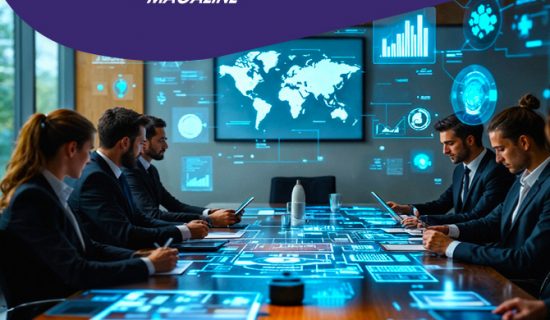
While we wait for a vaccine to free us from this virus and amidst the uncertainty of what else might happen tomorrow, the only option is to equip ourselves with tools that allow people and organizations to continue their lives and activities, free from physical locations and in the safety of their homes. Fortunately, we are helped in this by the digital cloud technologies "virtual workplace" where activities, roles, people, tasks, organization, and processes can be found, without the need to travel.
In this period of uncertainty, large companies have migrated their entire operations to the cloud, allowing their employees to continue working without interruption; small and micro businesses, forced to rely on digital process management systems, are considering the possibility of "dissolving" their physical offices post-pandemic.
Of all the improvised changes forced by the emergency, digital management of one's organization deserves to become a strategic business asset.
The key to transforming the uncertainty of the emergency into the ability to manage and succeed in the new normal is therefore the combination of digital and BPM. cloud- based technology now that allows for remote and mobile management of organizational processes. Furthermore, this tool must ensure maximum security for protecting transactions and information, be easily adaptable to circumstances, and allow for changes to be made quickly and without necessarily requiring the intervention of consultants or system integrators . This would allow organizations to modify their processes and manage them digitally should new emergencies like the current one arise.

Editorial by:
Rita Genchi –
Sales & Marketing Specialist Openwork
JAMIOPILL | COVID-19: Is our visitor register up to date?
It's become increasingly important for companies to be prepared for stringent new security regulations .
This short video tutorial will show you a smart and secure way to manage your visitor log .
Do you want to learn more about the topic?