


Stories of digital innovation by no-code
Discover the opportunities of the channel program
Join the Network
Leverage the resources of Jamio
We collaborate with universities
News from the world of Jamio Openwork
Stay up to date on the world of no-code and digitalization
The periodical on no-code and BPM
Events dedicated to Jamio producers, partners, and customers
Free downloadable guides
Independent Software Vendor
Join our team
Our locations
Forever part of who we are
Jamio 6.0 introduces Ouverture, the version that ushers in a new phase in the platform's evolution. A phase in which Model-Driven, One Workforce , and Sovereign Platform converge into a single operational paradigm, designed to put AI at the service of the organization, not vice versa.
A leap already announced, in fact, at Jamio Community Day 2026, full of novelties that we analyze together, starting from an in-depth analysis of the 3 principles that hold this vision together:
At Jamio, every solution has always been born from the composition of specialized models—organization, data, documents, processes, interfaces, integrations, people, and now AI agents—designed and developed in a no-code environment. The model doesn't document the application; the application is. This is why every business evolution translates directly into updated solutions, reducing time, costs, and complexity.
People, AI agents, and automations share the same organizational model, allowing them to operate as asingle digital workforce. Roles, responsibilities, skills, and collaboration rules are defined once and apply to all stakeholders involved in the processes. Each activity is assigned, monitored, and governed throughout its lifecycle.
Security, access control, data protection, auditing, traceability, and regulatory compliance have always been components of Jamio, not components to be implemented on a project-by-project basis: they are native platform services, inherited by default by each solution and designed according to the principles of Security, Privacy, and Governance by Design, providing the necessary foundation for compliance with the main regulatory frameworks, not least theAI Act.
Ouverture is the point at which these three principles begin to translate into the daily experience of those who design and use Jamio applications. It is also the release that paves the way for a new model, outlining an evolution in which artificial intelligence gradually shifts from an external component to be integrated to a native resource of the organization, governed within the same model that coordinates people, processes, and systems, according to the same logics of responsibility, control, and security.
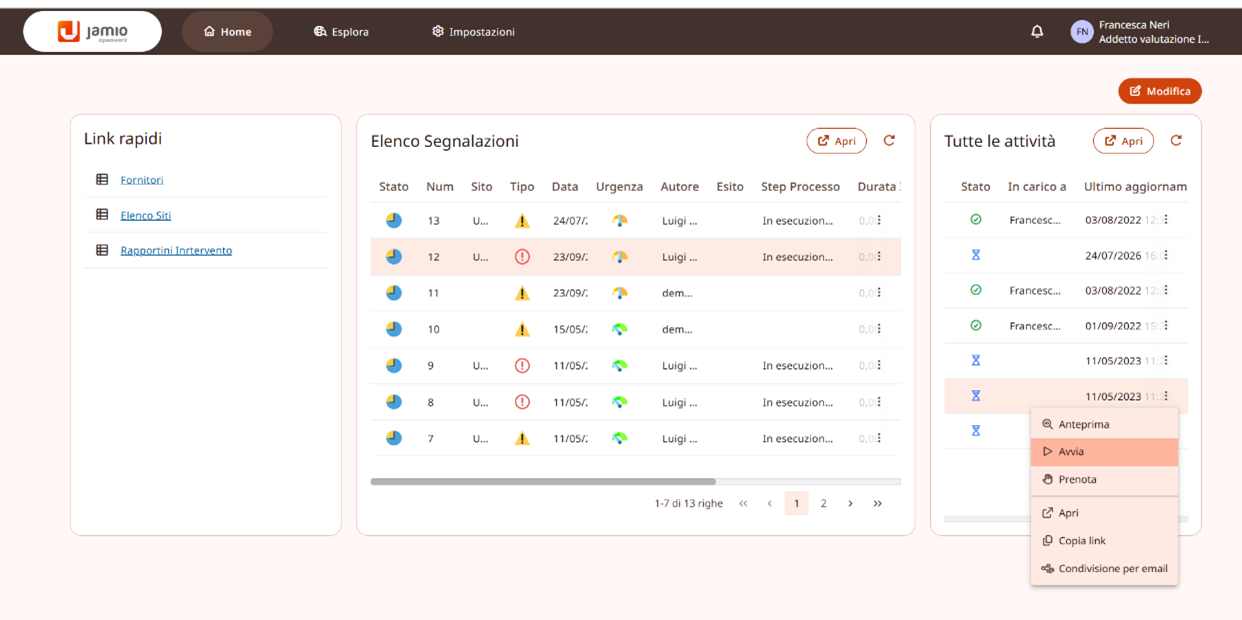
The first change concerns adoption. The default home page and area menus are configured once at the tenant level and apply to all users who don't have their own customization, which is still possible. Anyone accessing an application for the first time will find an environment that's already consistent and immediately operational.
The pace of daily work also changes. Split View, advanced catalogs , and Custom Actions improve operations: list and detail views coexist on the screen, contextual and bulk actions are launched directly from the list, and a single catalog can represent information belonging to different types.
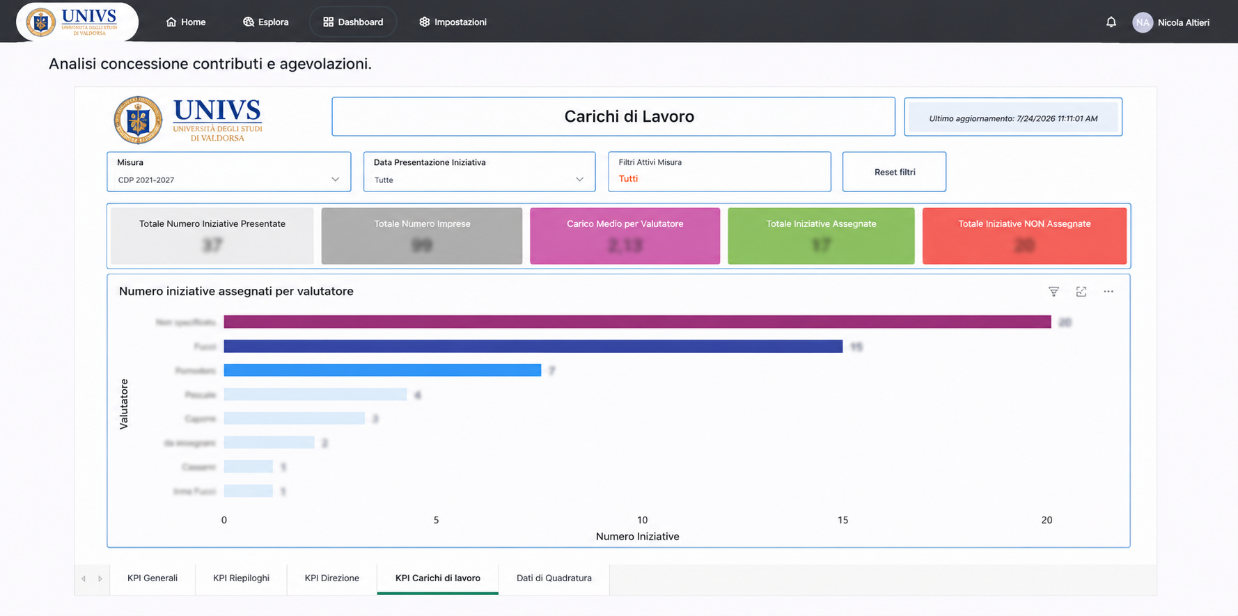
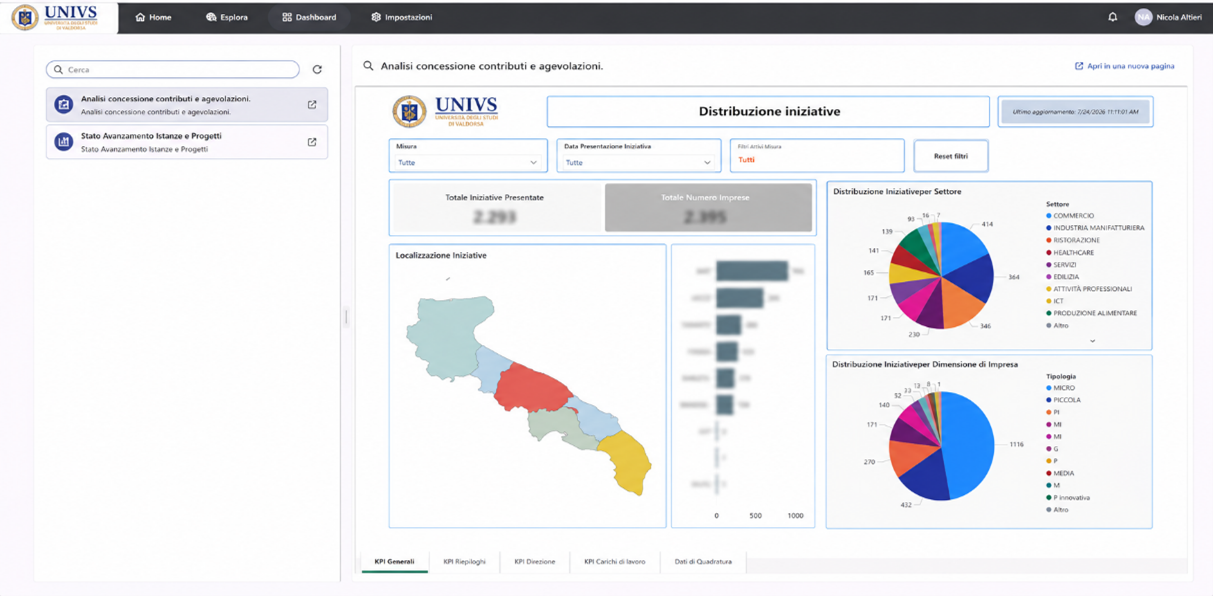
The investment already made in the Microsoft ecosystem is also incorporated into the processes. Microsoft 365, Microsoft Entra ID , and Microsoft Power BI are not just tools that sit alongside the platform, but are part of the workflow orchestrated by Jamio, without duplicating environments or skills: a contractual document is drafted collaboratively without leaving the context of the process that generated it, access occurs with the company credentials already in use, keeping identity management centralized, and management can monitor process performance in a dashboard powered by platform data, without building a dedicated data warehouse.
On the document front, configurable versioning, automatic rules on historical versions, main, admitted and generated components, and automatic extraction of signature details are added.
Signature verification on a received document occurs within the process, during the acquisition phase, and not as a manual check downstream; document versioning policies are defined once and applied automatically.Massive updating of document templates, propagating changes to a template to all documents that use it.
Finally, there's a benefit that won't be measured in this release, but in those that follow. The organizational model that defines roles, responsibilities, and collaboration rules, and the console from which identity and user experience are currently governed, are the same infrastructure onto which AI agents will be grafted. In fact, we're already working within the model intended to govern the entire One Workforce.
The main new features of this release include Jamio On Stage NEXT, the new platform frontend,integration with Microsoft 365 and Entra ID, the new Microsoft Power BI connector, the evolution of Jamio Composer and document modeling, and new user experience governance tools in the Jamio Admin Console.
Jamio Ouverture also releases the new On Stage NEXT, already available in beta since 4.8R5, accessible from https://paas.jamio.com/onstage. The classic frontend will still be available.
NOTE:
Features marked NEXT Jamio are designed to leverage the power of Jamio On Stage NEXT and are therefore available exclusively to applications running on the new frontend. Applications continuing to use the previous frontend will retain the behavior already available in previous versions.
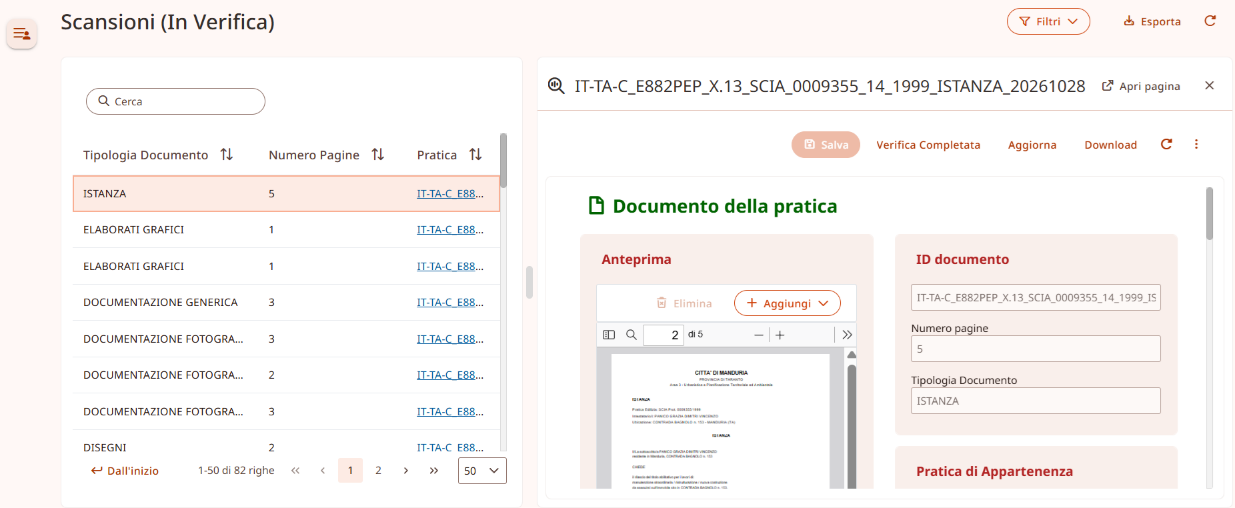
Jamio On Stage NEXT introduces a completely revamped interface designed to improve navigation, simplify access to platform features, and leverage the new design capabilities offered by Jamio Composer. Key new features include:
Completely redesigned navigation experience, more intuitive, consistent and productivity-oriented.
New workspace organization, with more effective management of space and information.
Customizable navigation menus, with centralized configurations per tenant and area, alongside the option for individual customization.
Improved document experience, thanks to new ways to open documents and the ability to configure the display of metadata, preview and components based on application needs.
In September we will present Jamio On Stage NEXT during a dedicated webinar, with a live demonstration of the main new features introduced by Ouverture.
With Ouverture, Jamio openwork strengthens its integration with the Microsoft ecosystem, introducing new features that simplify collaboration, identity management, and data analysis.
The goal is to enable organizations to leverage the tools already adopted in the company, integrating them natively into the digital processes orchestrated by the One Workforce Platform.
Document collaboration with Microsoft 365, authentication via Microsoft Login ID , and integration with Microsoft Power BI represent three pieces of a common strategy: connecting people, data, and applications in an increasingly integrated, secure, and collaborative work environment.
Document collaboration enters a new phase thanks to integration with Microsoft 365.
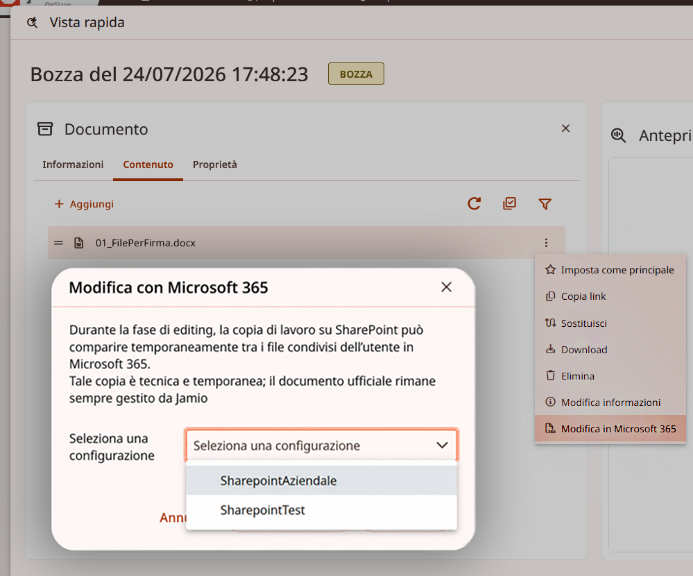
The new Microsoft 365 Plugin lets you collaboratively open and edit Microsoft documents associated with Jamio Documents, while maintaining the connection to their application context.
File editing is managed with Microsoft SharePoint, ensuring operational continuity and information traceability, while the plugin configuration takes place directly from the Jamio Admin Console.
Jamio openwork supports integration with Microsoft Entra ID, allowing users to log in to the platform with their corporate credentials and organizations to centralize identity and access management.
With Ouverture, this integration becomes a native feature of the platform: the Jamio Admin Console provides the tools needed to configure and manage it independently, making adoption even simpler and more immediate.
With Jamio Ouverture, the new Microsoft Power BI connector officially joins the Jamio openwork ecosystem.
The integration allows you to transform data generated by processes managed by the platform into dynamic dashboards, indicators, and analysis tools created with Microsoft Power BI and accessible directly from the Jamio interface. This provides
a new way to monitor KPIs, evaluate process performance, and support decisions with always-updated and immediately accessible information.
With Ouverture, Jamio Composer evolves to allow designers to take full advantage of the new capabilities offered by Jamio On Stage NEXT.
New features expand the possibilities for designing user interfaces, navigation, document management, and application interactions, providing even greater control over application behavior and experience.
Among the main new features:
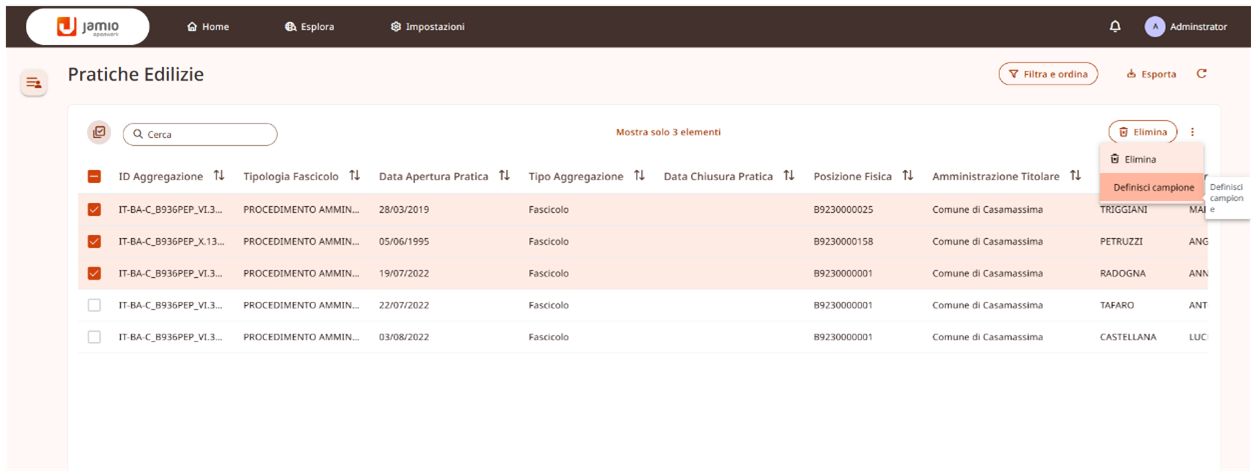
Custom Actions can be configured directly on catalogs to start mass processes, publish events, or call actions available in forms, simplifying the execution of contextual operations and making applications even more interactive.
For each catalog, you can now define the detail opening mode by choosing between Modal, Split View , or None. This configuration allows you to design a navigation experience that is more consistent with the application context and enhances the new user experience modes introduced by Jamio On Stage.
A catalog can now be modeled as a projection of multiple types, allowing information from different form types to be represented in the same view. This new capability expands design possibilities and allows for richer and more complete interfaces.
You can now launch asynchronously completed processes, in addition to synchronous processes and event publishing, from Custom Actions available in forms and catalogs. This increased flexibility allows you to design more efficient workflows that are better suited to different operational scenarios.

With Ouverture, document management evolves on three fronts: document modeling, automation of signature checks, and mass template maintenance.
Document modeling has been enhanced with new features that expand the Document model's configuration options and allow for even more comprehensive management of the document lifecycle and the user experience within applications. Among the key new features:
Configurable document versioning
You can now configure versioning behavior by defining general properties, rules dedicated to the first publication, and specific settings for the publication of subsequent versions, offering more precise control over the evolution of documents.
Automatic management of previous versions
New rules allow you to define how to manage historical versions of documents, setting the maximum number of versions to keep and choosing the behavior to adopt when the limit is reached, from blocking publication to automatically deleting the oldest version.
Configurable browsing experience
You can define which panels to display when opening a document, choosing between metadata, component preview, component list, or different combinations of views, to offer users a more effective browsing experience that is consistent with the nature/type of the document.
Guided Management of Document Components
The configuration of Documents and their Components becomes even more complete thanks to the possibility of defining main components, allowed components and automatically generated components, as well as new constraints for File, Document and Link Components.
These features guide document creation, improve their quality, and simplify users' work.

With the new ExtractSignatureDetailsFromDocument method, the Jamio Document Automation PLUG is able to analyze a signed document and automatically extract the details of the signatures placed there.
The method provides both summary information and analytical details on digital signatures, including any data available in the signature report. This feature simplifies the automation of document processes that require signature verification or control.
The new CustomizeDocumentsByList and CustomizeDocumentsByCatalog methods have been introduced . These methods can be called within Jamio processes and allow for bulk updates to the document model associated with documents in a list or catalog. Changes made to the model are automatically propagated to the documents that use it, simplifying maintenance activities and significantly reducing update times.
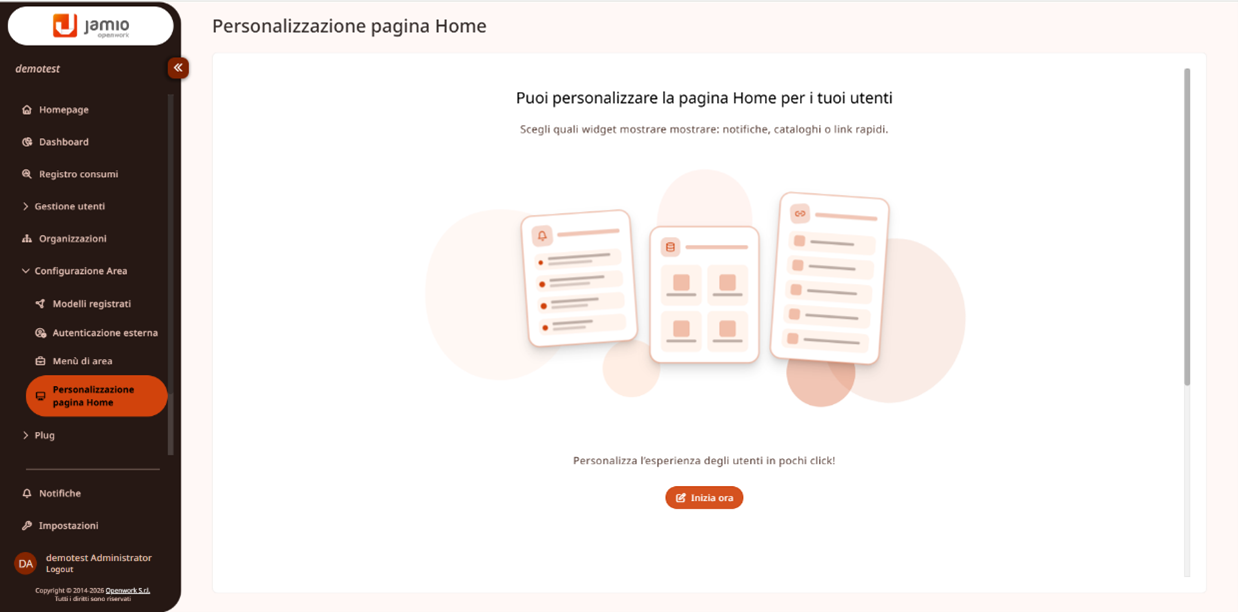
With Ouverture, the Jamio Admin Console introduces new tools to centrally define and manage the Jamio On Stage, allowing administrators to configure the Home Page and Menu area for each tenant.
Among the main new features:
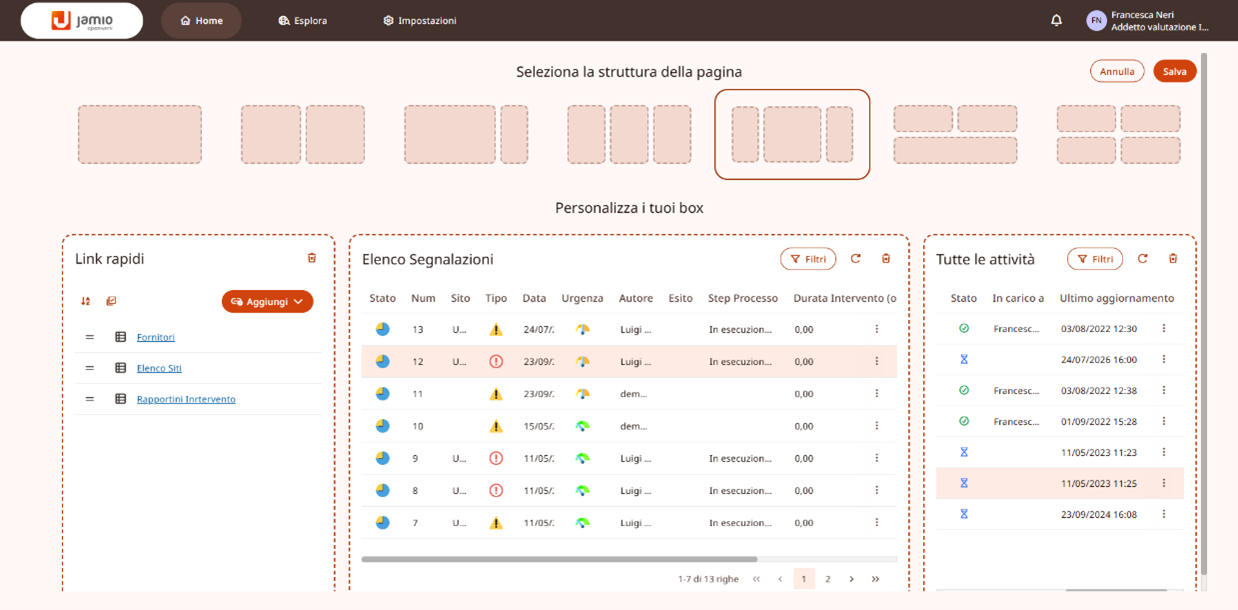
Tenant Default Home Page ![]()
A new editor is available that allows you to define the default home page . This setting is automatically used for all users who haven't yet customized their home page, ensuring a consistent and immediately operational initial experience. Users can, however, create their own custom settings later.
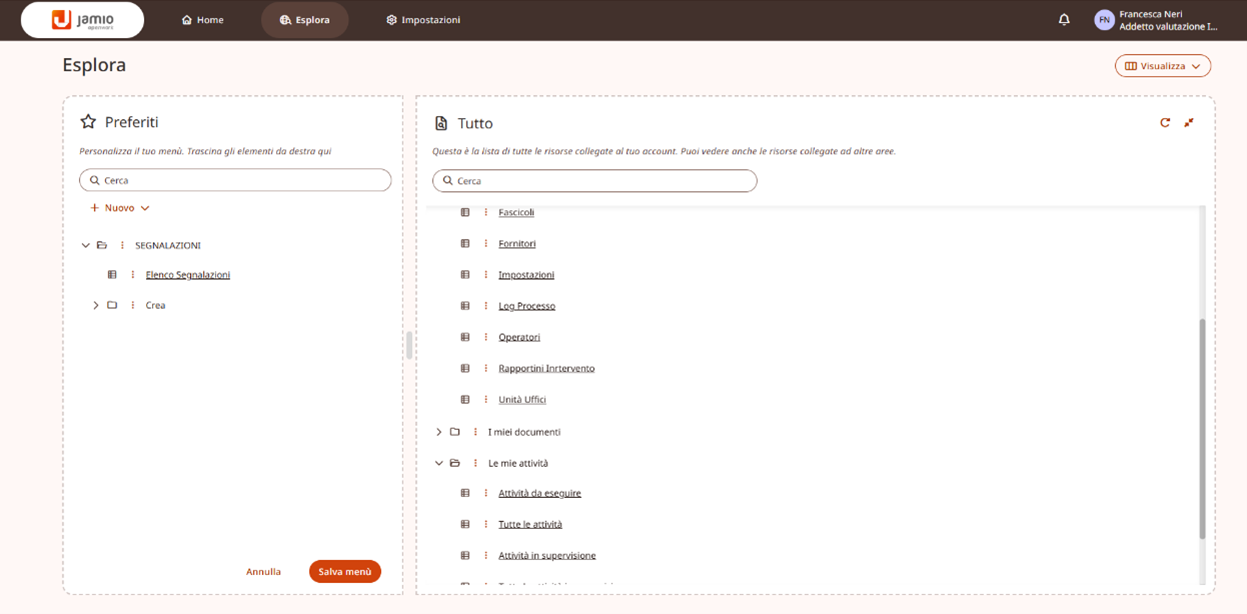
Default Area Menu: ![]()
A new editor allows the administrator to define the area menu shared by all users. The configured menu becomes the default for users who do not have a customization. If the user is enabled to customize their User Menu and has defined a custom menu, that menu will still take precedence.

Like every new Jamio openwork release, Ouverture includes numerous optimizations, performance improvements, and fixes that increase the stability, reliability, and overall quality of the platform.
An overture is, by definition, already finished music and at the same time an anticipation of the themes that will be developed.
The new features in this release —the new frontend, centralized user experience management, native integration with corporate identities, and the evolution of the document model—aren't just a random list. They're the foundation for the next step: bringing AI agents into the same model that currently coordinates people, processes, and systems, with the same rules for assignment, traceability, and accountability.
This is an architectural direction, not a list of already available features: agentic capabilities will be progressively introduced in upcoming releases, and we will share them, as always, when they are fully usable and can be demonstrated live.