





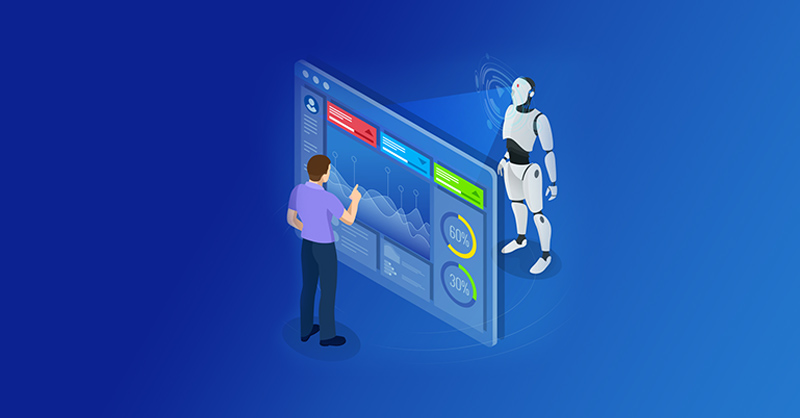
Artificial intelligence is gaining increasing prominence in the technological landscape, and while until recently it was considered exclusively a discipline for creating machines capable of "acting" autonomously and performing actions, the story has now changed because artificial intelligence is beginning to include, within its potential, also solutions for streamlining daily business activities.
To better understand this topic, it is necessary to focus on Business Process Management; in fact, technologies focused on business process can be combined with cognitive services – already available on the market – capable of creating, together, an artificial intelligence logic oriented towards process vision and the achievement of business.
Thanks to the fusion of BPM and cognitive services, companies will be able to take advantage of very powerful tools capable of analyzing scenarios and making decisions, and with the complicity of humans (the ability to train machines – Machine learning) obtain increasingly intelligent, faster and more efficient services.
A huge innovation opportunity that is set to spark a race toward intelligent digitalization to improve customer experience and increase revenue.
Meanwhile, today at Microsoft House in Milan, Openwork and Microsoft will address this very topic, with an event entitled "Business Processes in the Cloud": the aim is to explain how the Jamio openwork BPM platform and Microsoft Azure cognitive services can make organizations' business activities more effective and efficient.