



Governance, Risk & Compliance (GRC): This is not just a set of controls or software tools, but the system that governs processes, decisions, and responsibilities within an organization. For this reason, GRC must evolve from a control function to a continuous operational infrastructure, integrated into business processes.
Governance, risk, and compliance have become central issues for organizations. This is not only due to an increasingly complex regulatory framework, but also to the growing focus on operational risks , transparency , and the ability to respond to complex and ever-changing environments.
Yet, observing how organizations actually function, a clear contradiction emerges: GRC is often treated as a separate system , useful during audits but remote from day-to-day operations. An "external apparatus" that monitors, but does not truly govern, the work.
The problem – obviously – is not GRC itself, but rather the approach with which it is implemented : solid in theoretical models, but weak when it has to impact real processes .
The gap between control and operation
Traditional GRC software was born with a clear mission: to ensure control. Risk registers, policy repositories, and reporting tools are essential components, but they raise a crucial question: where does GRC actually occur in everyday work?
The answer is as simple as it is cumbersome. GRC takes shape in operational processes, in decisions distributed across multiple roles, in exceptions handled via email, in Excel spreadsheets that support repetitive tasks, and in constant, difficult-to-track changes of ownership. This is where governance, risk, and compliance are determined. And this is precisely where traditional GRC systems struggle to intervene , because they were not designed to support operations.
A necessary change of perspective
When governance remains confined to static policies and procedures, it risks remaining on paper. A process-driven approach, on the other hand, allows rules to be transformed into operational mechanisms , making them an integral part of daily work. On Jamio openwork , policies become executable processes: from drafting to approval, from publication to application in related processes, up to version tracking.
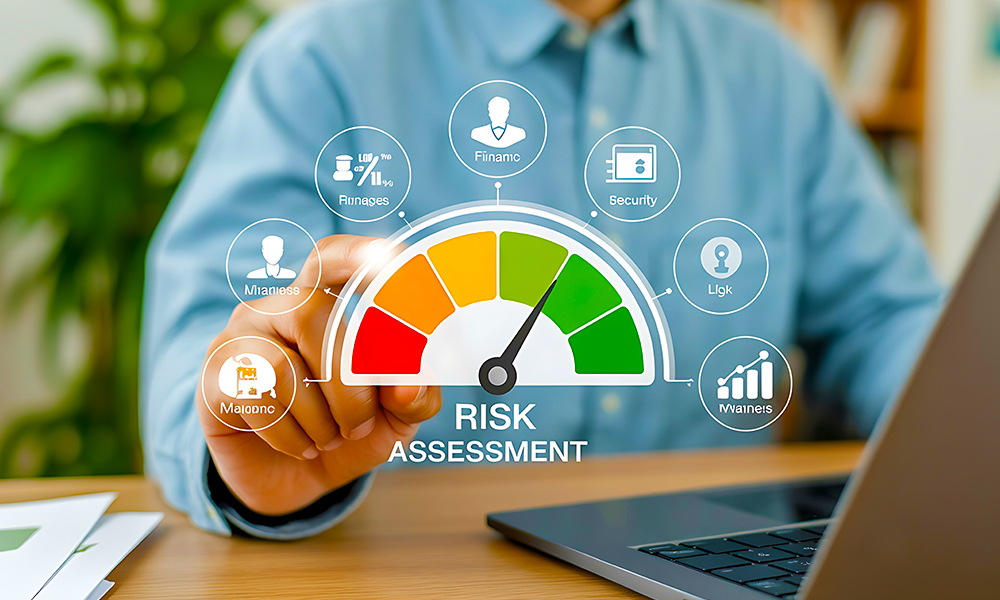
The same applies to risk management . A risk register is useful, but it remains abstract if it isn't connected to the points where risks actually manifest. Integrating GRC into processes allows for automatic and contextual activation of controls, escalations, and corrective actions, transforming risk management into a widespread and continuous organizational capability.
Compliance also evolve. For complex regulations like the GDPR, Model 231, or ISO standards, compliance doesn't have to be a periodic, post-hoc check. It can be designed directly into processes, translating regulatory obligations into guided operational activities, with automatic evidence generation and always-available audit trails. This is the principle of compliance by design : invisible for those who work, robust for those who monitor.
From ex-post control to continuous control
This approach marks a true reversal of the control model. The main limitation of traditional controls is post-hoc intervention, once the error has already occurred. A process-based model instead enables preventive and contextual controls, built-in segregation of duties, and automatic activity tracking. Control is no longer an additional activity, but becomes an integral part of the process itself.
Why traditional GRC software isn't enough
GRC solutions are clear: separation from operations, design focused on auditors rather than users, and rigidity in responding to regulatory or organizational changes. Jamio openwork overcomes these limitations not by adding another "GRC module," but by providing a no-code, process-oriented, and adaptive platform that can evolve alongside the organization.
Conclusion: a GRC that enables, not that holds back
Modern organizations must be compliant, resilient, and fast. To achieve this, GRC can no longer be perceived as a brake, but must become an enabler . The true paradigm shift is moving from a controlling GRC to a GRC that supports daily work , eliminating redundant activities and ex-post evidence collection.
With Jamio openwork this model becomes concrete, paving the way for one of the most significant evolutions in organizational governance: transforming compliance from a bureaucratic burden to added value .