






Digitalization requires fast and effective tools: discover the difference between traditional software and a BPM platform for automating business processes.
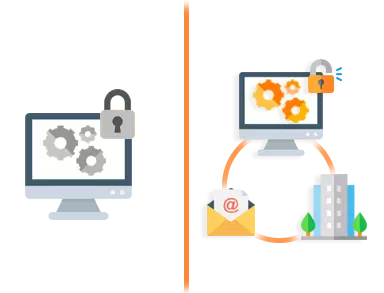
The software is custom-made and does not adapt to changes
Traditional vertical software is created to manage specific processes: it's tailor-made to meet the organization's specific needs. As a result, its functionality is limited, static, and not expandable or easily adaptable to changes within the organization itself.
The platform adapts to business changes
Business Process Management platform is conceived, designed, and built to be the process management tool that best adapts to the organizational context and responds to changes and business needs, through simple, fast, and flexible rules and procedures that can be used even by those without development expertise.
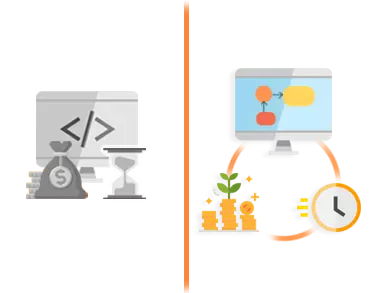
Software changes are time-consuming and expensive to make
When new business needs arise, which require re-adapting processes, making changes to traditional software leads to long and cumbersome development and code updates, as well as new financial investments, thus compromising the flexible, efficient, and fast management of the business.
With the platform, changes are quick and without further investments
Through the BPM platform , it is possible to choose the rules that govern processes and events, modifying them whenever a business need arises that changes the previously established structures and procedures: all in a simple, fast way, without interventions on the code and without additional costs and charges.
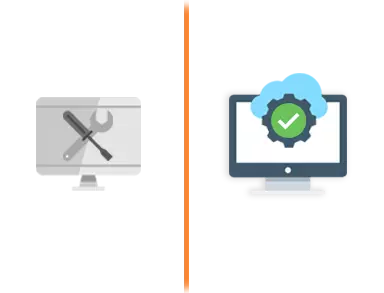
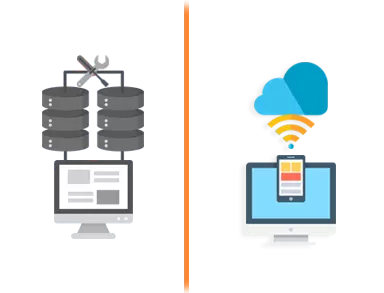
The software is installed on a PC and requires manual updates
Traditional software requires installation on one or more computers and must be periodically updated manually to ensure its functionality and efficiency over time: this leads to a greater expenditure of time and resources for maintenance and updating.
The platform works on the cloud and updates are automatic
The BPM platform isn't installed on your computer, as it's designed to operate in a cloud environment. This allows for a streamlined yet powerful management system, thanks to cloud-based features and security. Updates are automatic and fast, with no human intervention required.
Data retention requires infrastructure and maintenance
Storing, processing, and managing large amounts of data with traditional software means operating on infrastructures that require specific interventions to ensure their functioning, as well as having to tolerate more rigid and less flexible maintenance methods, times, and costs , and therefore less aligned with business trends.
The platform does not require any infrastructure and data is stored safely in the cloud
PaaS (Platform as a Service) has no infrastructure, which is the responsibility of the service provider, and provides an environment for building applications and services over the Internet, even for non-developer experts. Thanks to the cloud, the platform is flexible and adaptable, allowing remote work even among geographically dispersed teams, and allowing the secure management and storage of large amounts of data.
Are you thinking about a platform?
In this guide you will find 7 good reasons to switch to a business process management platform.
How to improve productivity Business Process Management technologies , without disrupting the present.