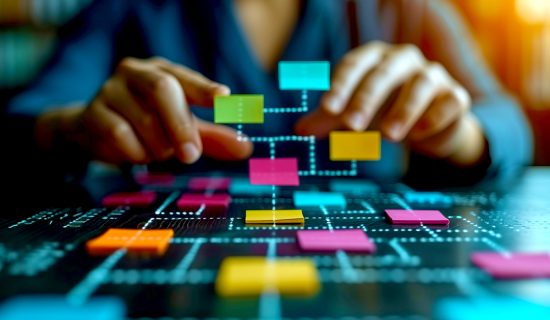







Systems modernization: no longer synonymous with radical transformations, but with continuous evolution. An incremental approach allows organizations to innovate processes and technologies without interrupting operations, reducing risks and accelerating results. Integrating systems, data, and processes thus becomes the key to sustainable and concrete modernization
When it comes to systems modernization, many companies continue to associate this topic with major transformations. These are long, complex, and often invasive projects that require significant investment and inevitably involve a certain level of risk. It's no surprise, then, that many organizations tend to procrastinate. Or they decide to get started, but with difficulty, quickly finding themselves faced with operational complexities that slow down their progress.
Yet, today modernization no longer necessarily requires revolutions. It increasingly develops through a different approach, more progressive, more sustainable, and closer to the operational reality of companies.
It's not about redoing everything.
It's about evolving what already exists.
The limit of large transformation projects
For years, modernization was approached as a one-off project. An initiative separate from day-to-day operations, with a clearly defined beginning and end, often aimed at completely replacing existing systems.
This approach, however, is now showing all its limitations.
On the one hand, the technological complexity accumulated over time makes it difficult to make radical changes without impacting operations. On the other, the rapid pace of change in business needs and the competitive landscape quickly renders even the most recent solutions obsolete.
The result is a constant tension between the need to innovate and the need to ensure continuity. Organizations thus find themselves stuck between two extremes: maintaining systems that don't evolve or facing transformations that are too complex to sustain.
From revolution to continuous evolution
To overcome this impasse, a change in approach is needed. Modernization can no longer be thought of as a one-off event, but as an ongoing process. A journey of progressive evolution, where each intervention generates value and prepares the way for the next.
This means shifting the focus from replacing systems to evolving them. It's not about eliminating what exists, but about building upon, around, and alongside it, creating the conditions for gradual but constant change.
In this model, innovation and continuity are no longer in opposition, but become part of the same path.
From technology to processes: where modernization really comes from
Modernization isn't just about systems, but how they support business processes. Value is generated, decisions are made, and activities and information are coordinated within processes. Intervening on systems without considering processes limits the impact of the transformation .
Conversely, starting with processes allows us to identify where modernization can produce concrete benefits in the short term. This means addressing the areas where inefficiencies are most evident, where manual steps slow down work, and where a lack of integration creates redundancies and information loss.
In this sense, modernization becomes a targeted activity, capable of generating value immediately, without waiting for the completion of an overall project.
Connecting what exists
One of the main factors amplifying the gap between vision and implementation is technological complexity. Layered systems, rigid integrations, and long development times make it difficult to quickly translate decisions into operational solutions. In this scenario, technology risks becoming a barrier.
But it can also become its opposite: an execution accelerator.
The evolution towards cloud platforms and no-code models is profoundly changing this balance. The ability to rapidly develop applications and digitize processes allows organizations to dramatically reduce the time between a decision and its implementation.
It's not just about speed, but about the ability to adapt. When processes can evolve rapidly, strategy also becomes more dynamic, closer to operational reality.
The value of data in a path of continuous evolution
In an environment where systems and processes are becoming increasingly interconnected, data takes on a central role. It's no longer just information to be archived, but an active asset capable of guiding decisions and improving processes. When data is accessible, integrated, and contextualized, it allows organizations to better understand what's happening and intervene more effectively.
Modernization ,in this sense, is not just technological, but also informational. It is the transition from systems that manage data to systems that enhance it.
Integrating architecture and execution: the value of synergy
A progressive modernization journey requires two fundamental elements: a solid architectural vision and the ability to quickly translate it into operational implementation.
On the one hand, it's necessary to define how systems should evolve, how they should integrate, and what principles should guide the development of the IT ecosystem. On the other, it's essential to have tools that enable these evolutions to be implemented rapidly, without introducing further complexity.
It is in this balance that the synergy between DWIT and Jamio Openwork fits in .
DWIT's consulting and systems integration approach allows you to manage complexity, design scalable architectures, and ensure system integration. At the same time, Jamio openwork allows you to rapidly develop applications and digitize processes, enabling continuous and sustainable evolution.
Together, they enable a modernization that doesn't interrupt business, but rather supports it over time.